A WALKING TOUR
A BIT OF HISTORY
The tradition has it that Florence was founded by Julius Ceasar in 59 BC as a Roman colony and military camp, but the prevailing hypothesis Is that It was founded between 30-15 b.c. It was named Florentia, meaning “flourishing”, after Flora, the goddess of the spring. It quickly gres into an important commercial and transport center due to its location on the Arno River. Between the 11th-13th century Florence became one of the most powerful independent city-states. As matter of fact, the city had become known for its efficient merchants, the cultural exchanges, banking families and its advanced monetary system, with the introduction of the Florin coin, that pretty soon spread and was used throughout Europe. By the early 12th century, the Guilds, associations of craftmen and merchants, played a central role in Florence, effectively ruling the city through their political power and influence over the city’s institutions, creating a unique guild-based system of governance. From the 14th century on, Florence emerged as the leading cultural and artistic center of the Italian Renaissance, a period of great innovation in art, science, and economics, that profoundly affected the whole european population. The Medici family played a key role in this flourishing era, by supporting and commissioning great works of artand creative genius, like Michelangelo or Botticelli. After the ruling house of Medici died out, their art collections were gifted to the city of Florence under the famous legacy negotiated by Anna Maria Luisa, the last Medici heiress, and the city passed under the Power of the Habsburg-Lorraine, until 1861 when the Grand Duke of Tuscany was overthrown and tuscany was annexed to the newborn Kingdom of Italy. Florence served also as the temporary capital of unified Italy from 1865 to 1871.
Today, it is celebrated as a major global art center and its historic center is a UNESCO World Heritage site, preserving its cultural and artistic treasures.
WHAT TO EXPECT
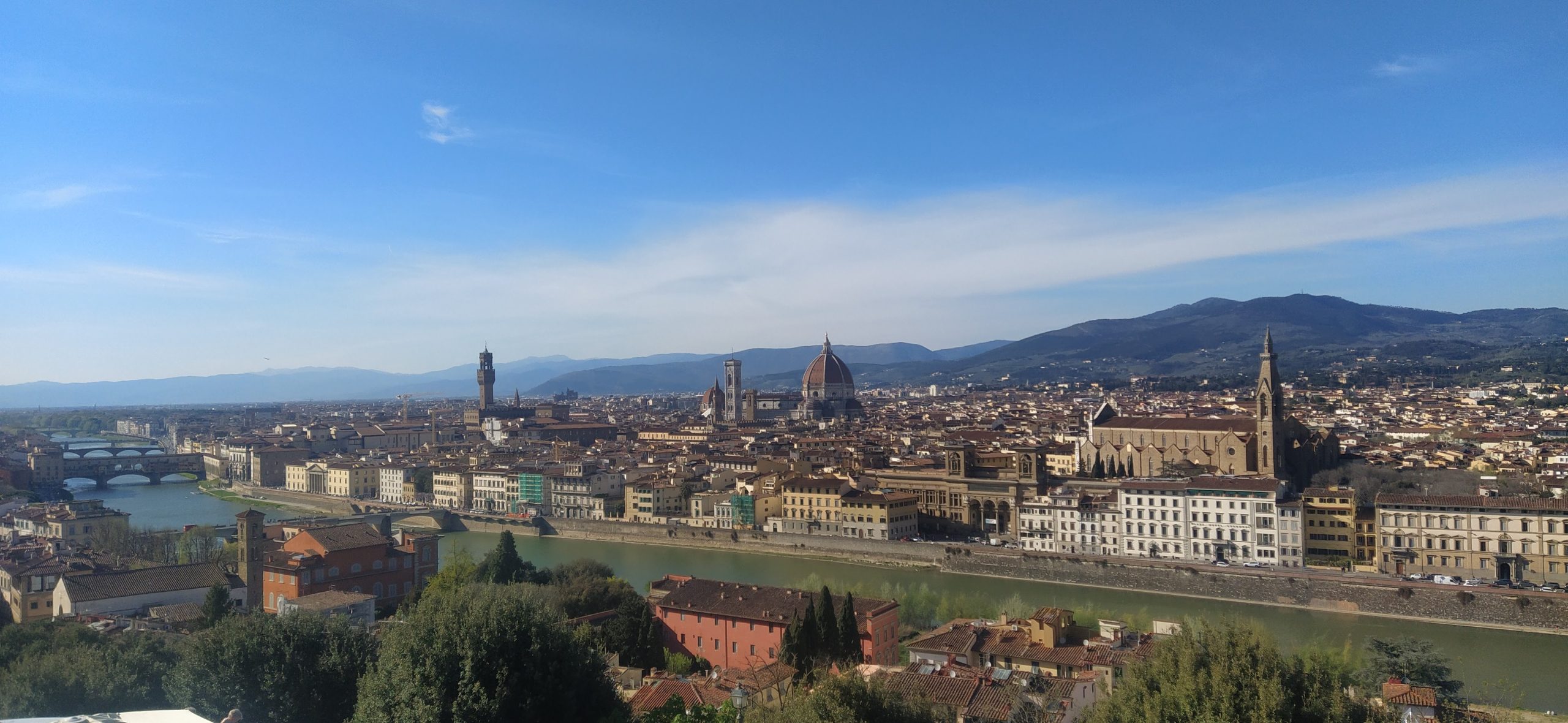
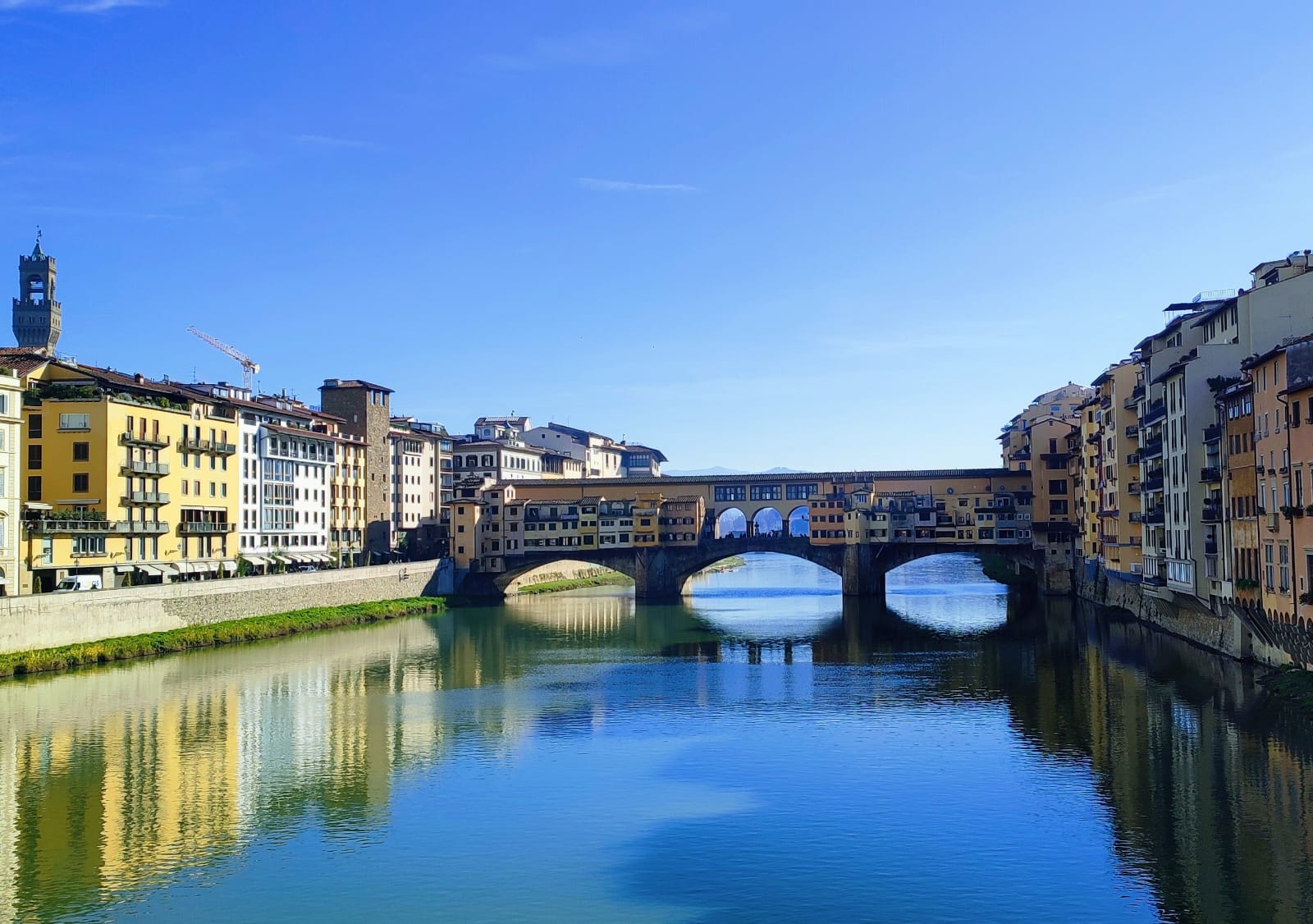
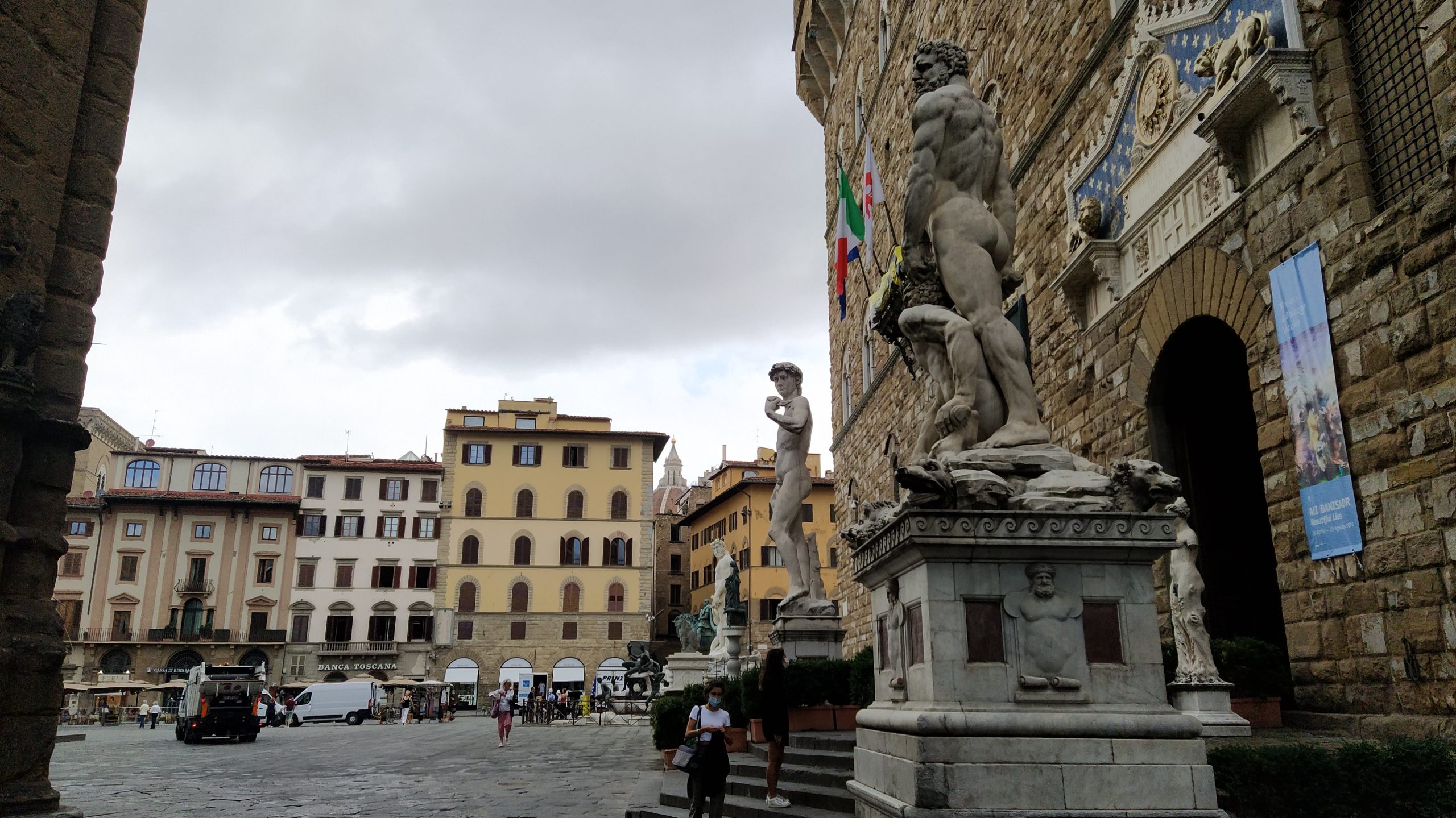
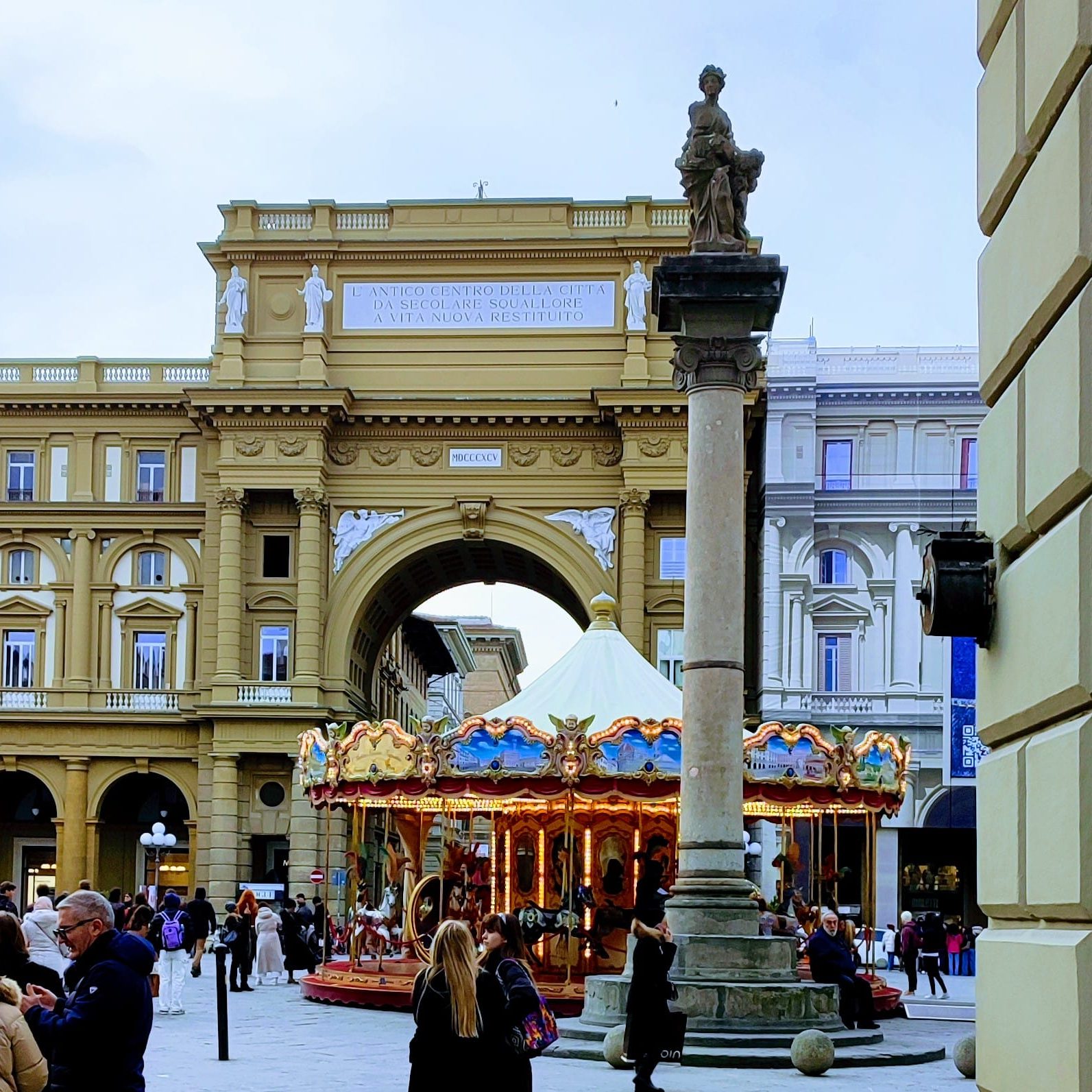
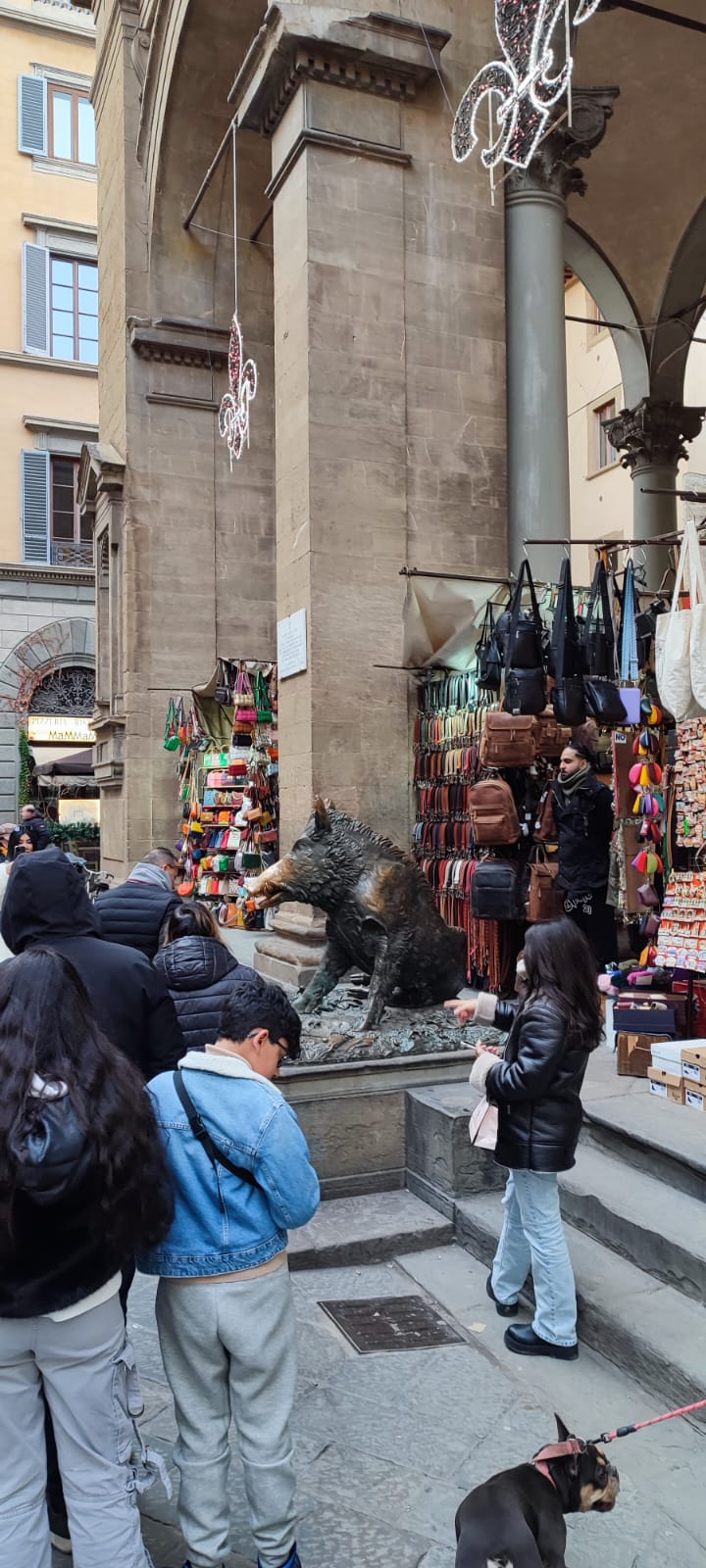
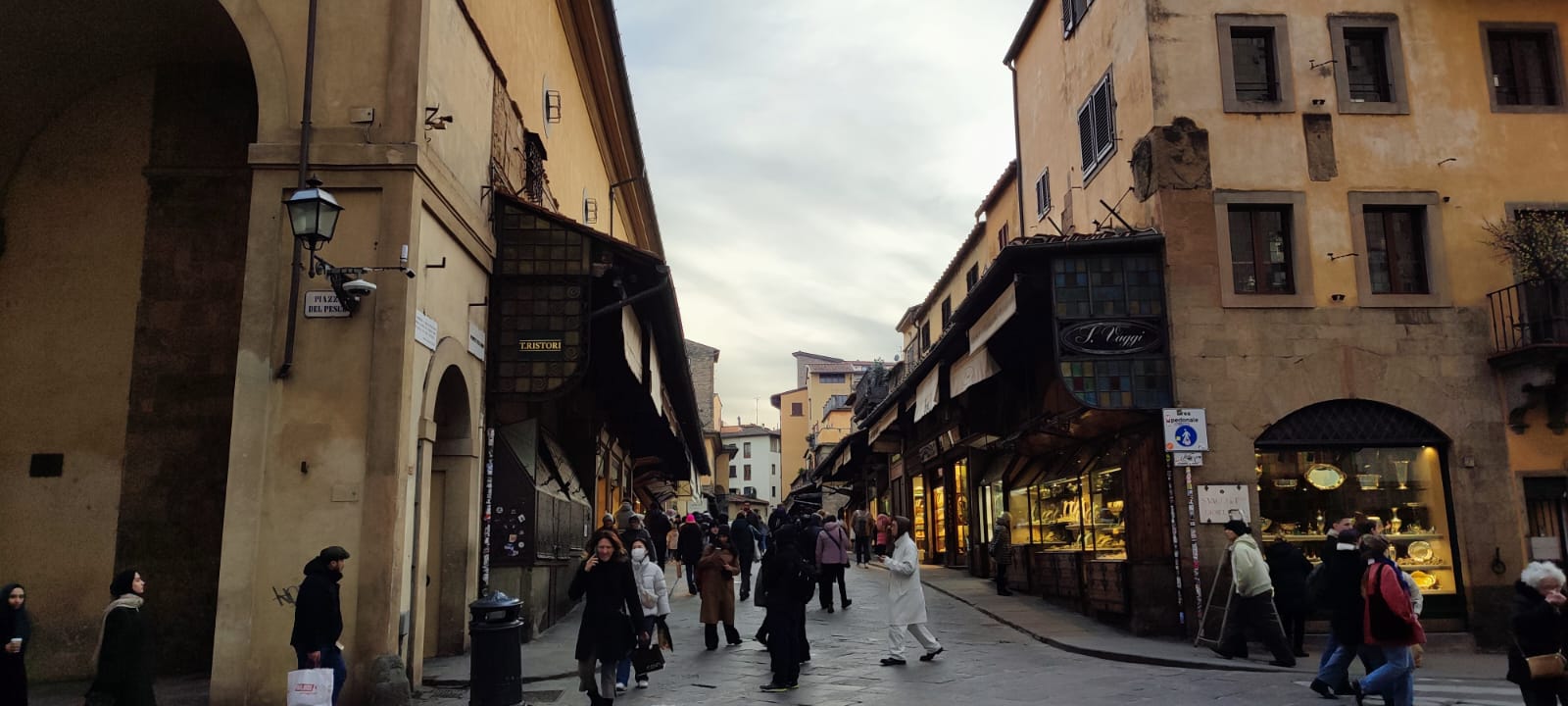
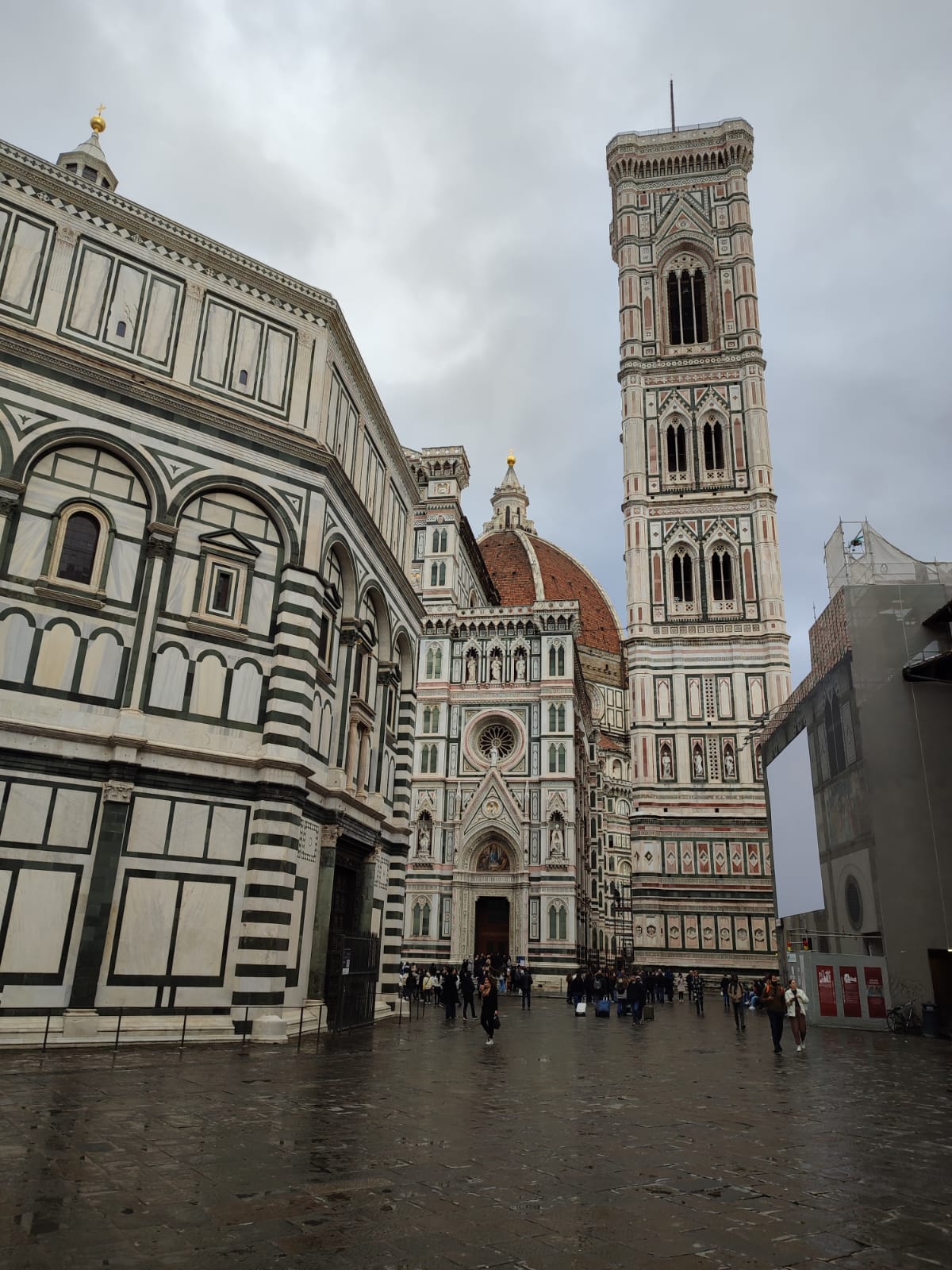
Florence, a city where art and history intertwine on every corner, invites you to embark on a walking tour through its charming streets. Every square, every monument, and every narrow alley tells a story that spans centuries, offering visitors a deep connection to its Renaissance roots. As you step into the city’s heart, you begin your journey through Piazza della Repubblica, one of Florence’s most iconic squares. Originally the site of the Roman Forum, Piazza della Repubblica is now the hub of the city’s life, a grand space surrounded by elegant arcades and cafes.. From here, you can feel the pulse of Florence, with street performers adding a touch of vibrant energy. A short stroll takes you to the Piazza del Duomo, where the majestic Cathedral of Santa Maria del Fiore (known simply as the Duomo) dominates the skyline. The cathedral’s facade, decorated in multicolored marble, is a masterpiece of Gothic architecture. But it’s the great dome, designed by Filippo Brunelleschi, that steals the show. As you stand before it, marvel at the scale and ingenuity that went into creating the largest brick dome in the world. The cathedral is a place of awe, but there’s more to explore around it. You can also visit the Baptistry of Saint John, known for its stunning Gates of Paradise, created by Lorenzo Ghiberti. These bronze doors are often regarded as some of the finest examples of Renaissance art.From the Duomo, you can wander through the narrow streets leading toward Piazza della Signoria. It’s here that you’ll find the Palazzo Vecchio, the city’s town hall, towering with its medieval stone walls. The square itself is an open-air museum, where statues like Michelangelo’s David (a replica, of course) and The Rape of the Sabine Women by Giambologna add to the square’s grandeur. The Loggia dei Lanzi houses masterpieces such as Perseus with the Head of Medusa by Cellini, creating a dramatic setting that captures the essence of Renaissance Florence. Just a few steps away, you’ll encounter Orsanmichele, a church with a fascinating history. Originally built as a grain market, it later became a place of worship. The church’s exterior is adorned with niches that house marble statues of saints, created by the great artists of the time, such as Donatello and Verrocchio. The vibrant Mercato Nuovo offers a delightful experience. This market is full of leather goods and souvenirs, and is home to the Porcellino, a bronze statue of a wild boar. Legend has it that rubbing the boar’s snout brings good luck and ensures your return to Florence. You’ll eventually find yourself near the Ponte Vecchio, Florence’s most famous bridge. Spanning the Arno River, the bridge is lined with shops selling gold and jewelry, a tradition that dates back to the 16th century. The view of the river from the bridge is breathtaking, as the sun reflects off the water and the surrounding buildings. This walking tour through Florence is not just about visiting landmarks; it’s about stepping into the past and feeling the city’s heartbeat. Florence is a city that rewards the curious, offering surprises around every corner, from the monumental grandeur of its cathedrals to the intimate beauty of its hidden churches and markets.
HAVE A LOOK AT OUR PHOTO GALLERY
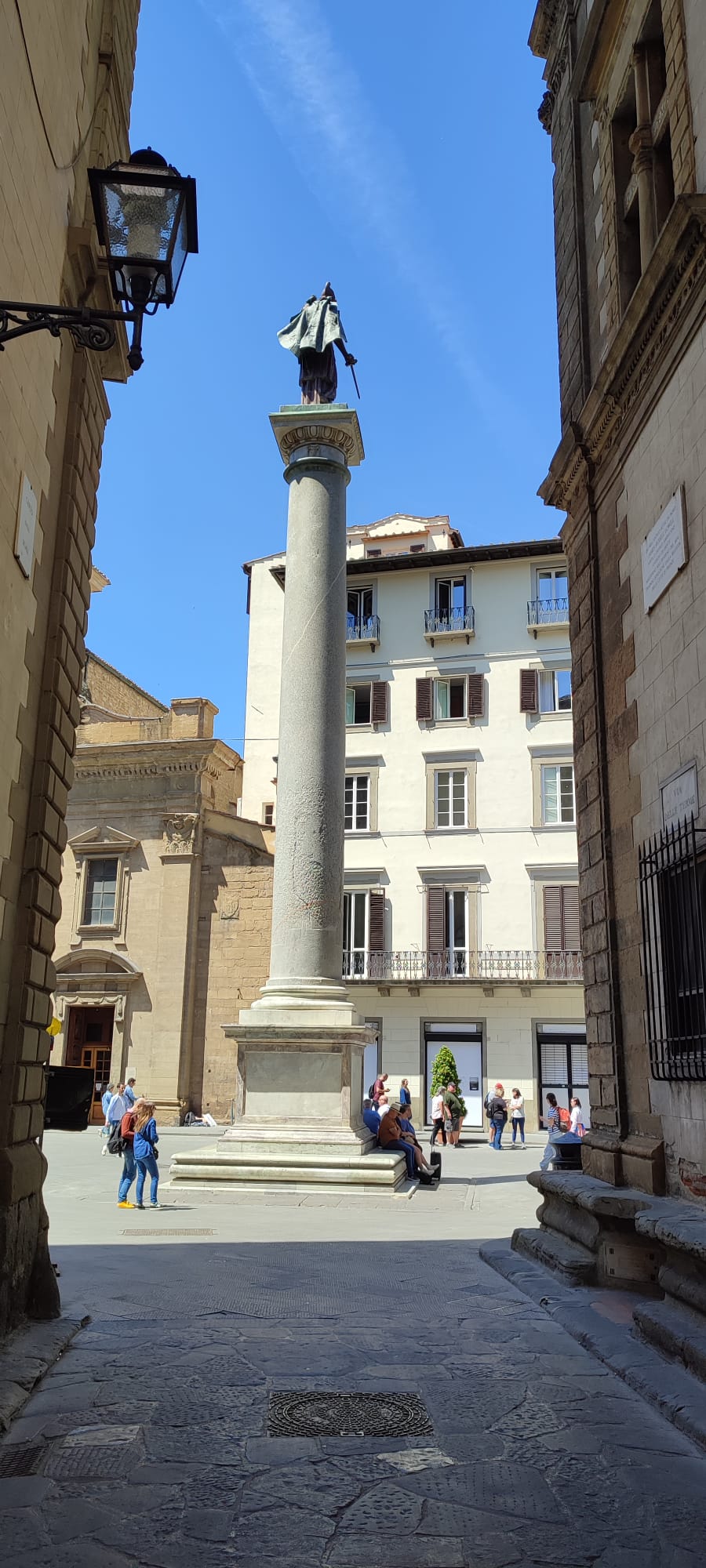
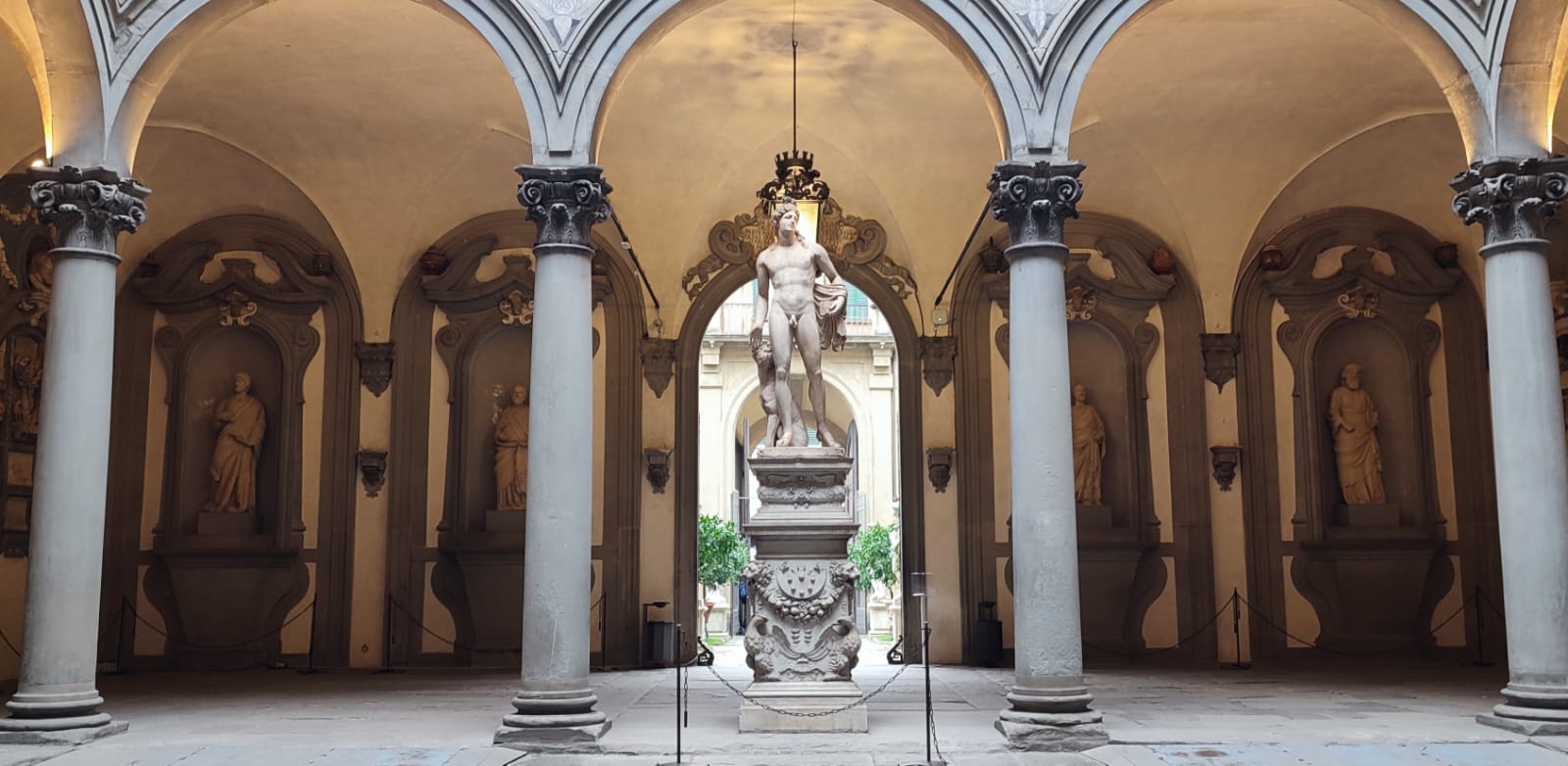
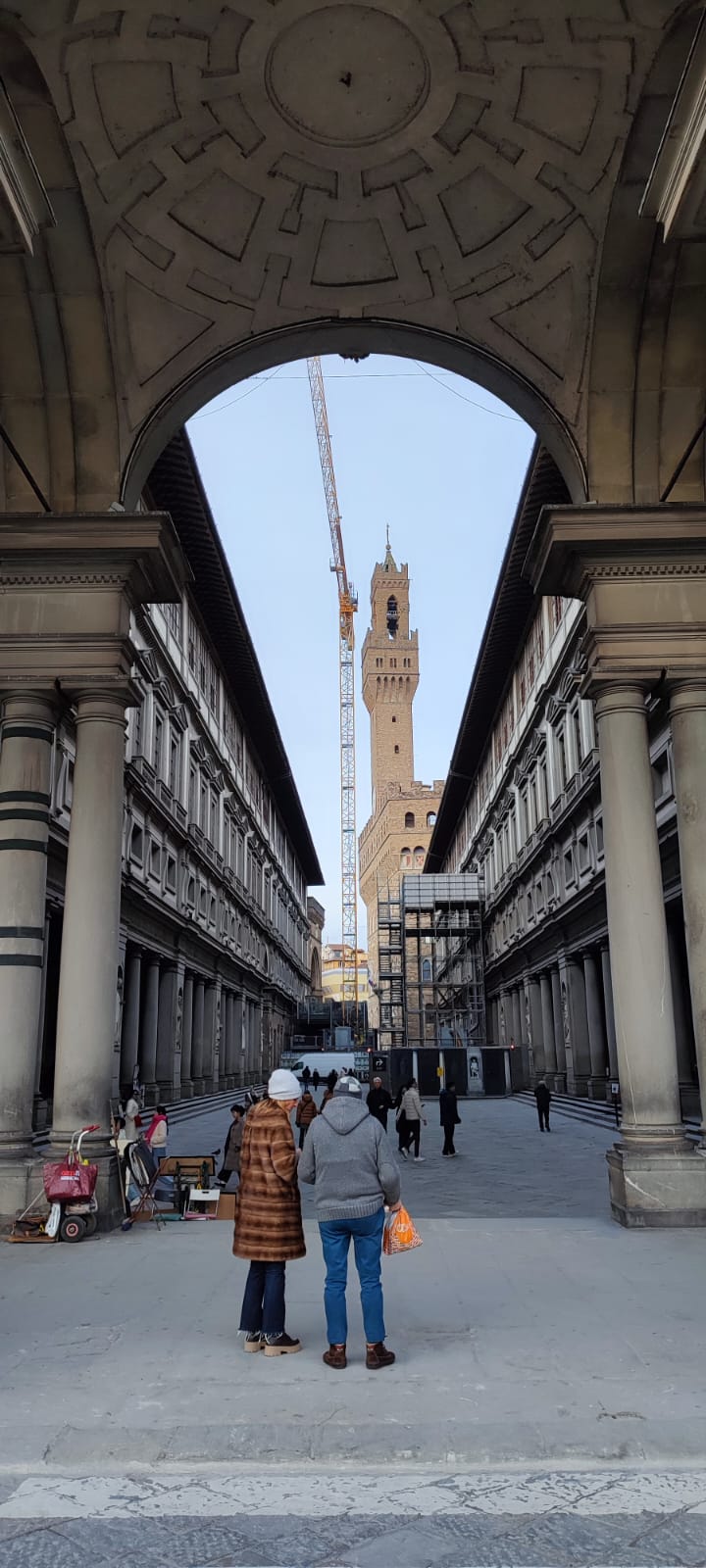
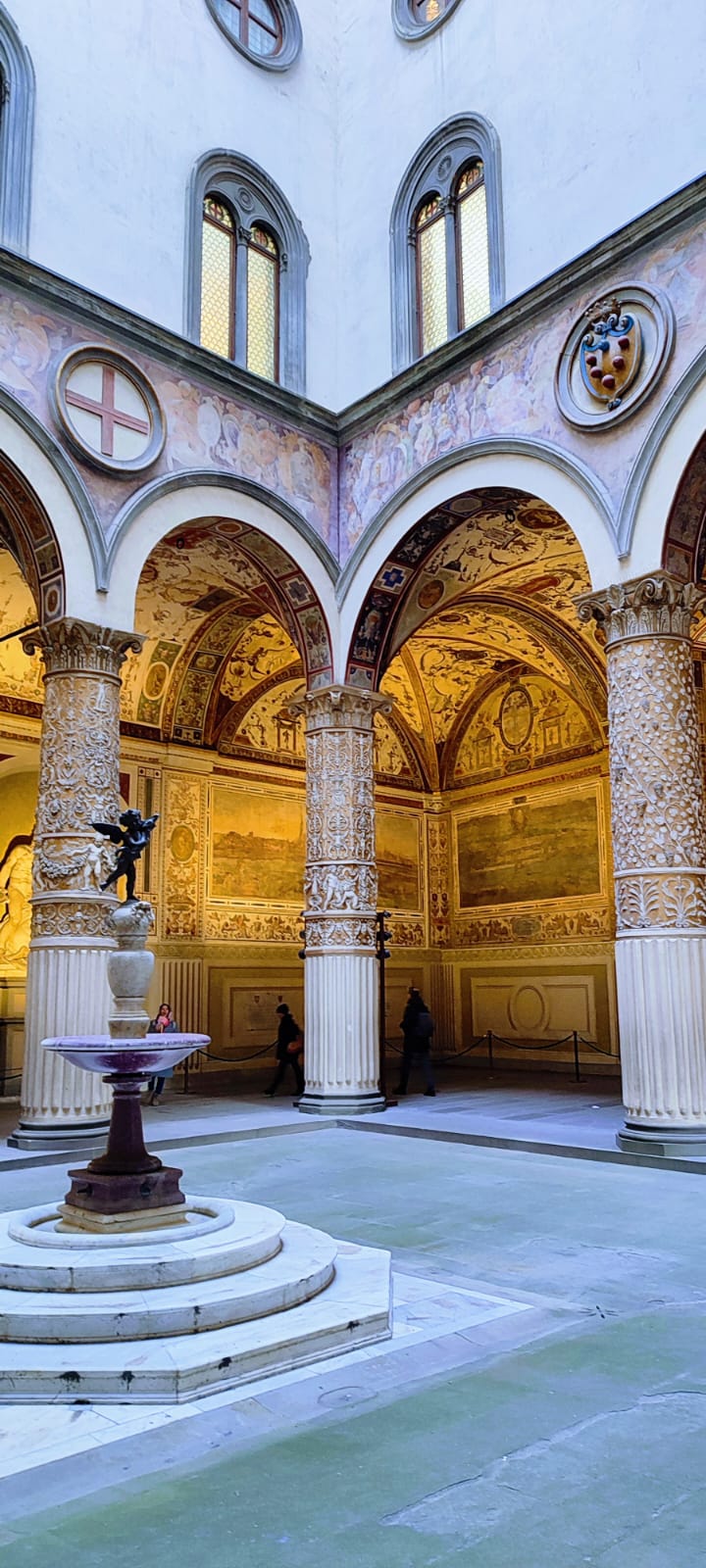
If you want to book a tour with us, ask for further information, require any more details, please do not hesitate to contact us, we will get back to you as soon as possible. we will try to make your travel experience extraordinary.
Do you want to reach out to us? You can choose how
ONLY PRIVATE TOURS